

Rethinking how we live and work under time pressure.
We have become extraordinarily good at saving time.
Technology allows us to communicate instantly, work faster and respond from almost anywhere. Information is available within seconds, and many things that once took hours can now happen almost immediately.
And yet, many of us feel more pressed for time than ever.
The question is no longer simply how to manage our time better. It is also what time pressure is doing to the way we think, decide, communicate and live.
When urgency becomes the default, we can start reacting before clarifying, treating every priority as equally important and moving faster without asking whether speed is actually required.
The New Time Culture™ explores how we can become better at choosing the pace a situation requires. The I Have Time™ Method brings that thinking into practice.
The problem is not simply time
Pressure is part of life and work.
Deadlines are real. Some situations require quick decisions. Clients may need immediate answers. Organizations sometimes have to move very fast.
The difficulty begins when urgency becomes so habitual that we stop distinguishing between what genuinely requires an immediate response and what does not.
Time pressure can influence the way we set priorities, make decisions, communicate with others and use our attention. It can follow us beyond work, making it difficult to disconnect even when nothing requires us to remain available.
This is why I am interested not simply in how much time we have, but in what happens to the quality of our thinking when we feel we don’t have enough of it.
The New Time Culture™
For a long time, speed has been associated with progress, efficiency and performance. And often, rightly so.
But faster is not necessarily better in every situation.
The New Time Culture™ questions what happens when speed and responsiveness become automatic expectations, and asks how we might become better at recognizing when speed helps us, and when it doesn’t.
This is not about replacing a fast culture with a slow one.
It is about recovering something more useful: the ability to choose our pace.

The I Have Time™ Method
Understanding the effects of permanent urgency is one thing. Knowing what to do when pressure is actually present is another.
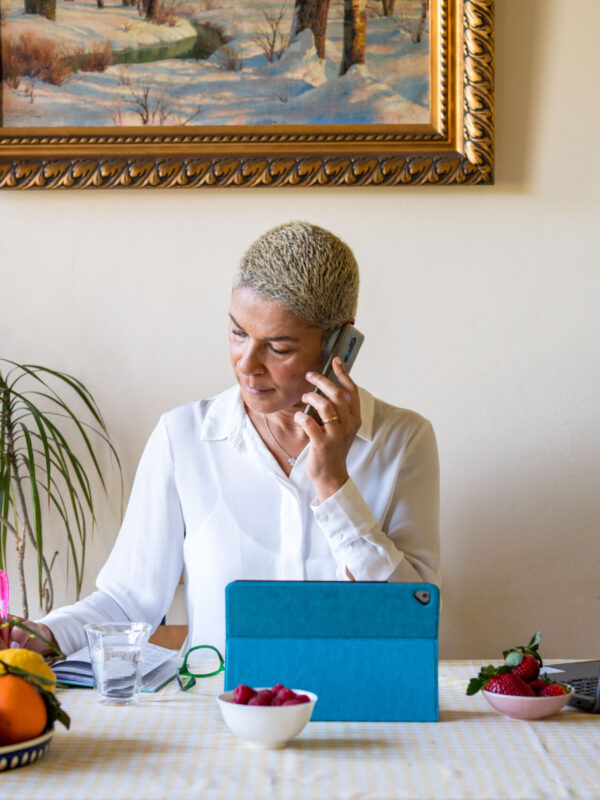
The I Have Time™ Method creates space between pressure and response so that choice becomes possible.
That space does not necessarily mean stopping for a long time. It may be a few minutes, a conversation, a clarifying question or, in some situations, only a few seconds.
The Method develops four interconnected capacities:
Awareness
Recognize how time pressure is influencing the way we think and respond.
Clarity
Distinguish what is genuinely urgent, what matters and what pace the situation requires.
Collaboration
Create greater clarity around urgency, priorities and expectations when other people are involved.
Sustainability
Make more deliberate responses to time pressure part of everyday life.
The objective is not to eliminate pressure. It is to become better at deciding how to respond when pressure is present.
Bringing the ideas into practice
I bring this work into different settings with organizations, individuals and audiences.
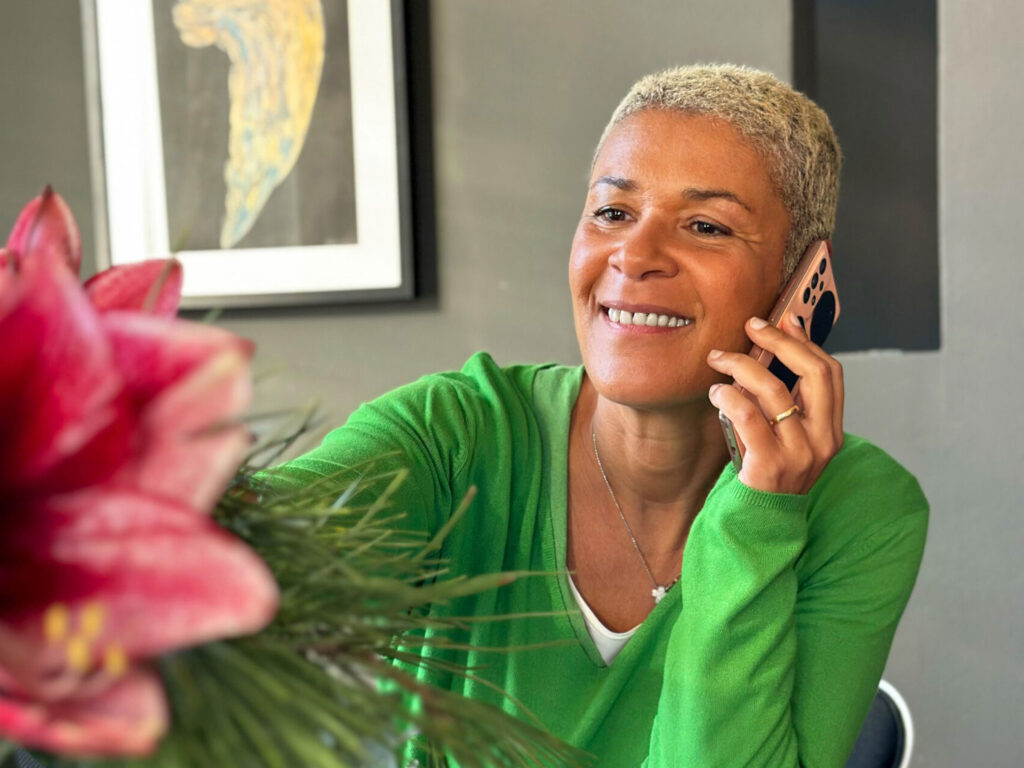
Through workshops and strategic team interventions, I help organizations recognize how time pressure is affecting priorities, decisions, communication and collaboration, and become clearer about what requires urgency — and what does not.
Explore For Organizations

I Have Time™ One-to-One sessions offer individuals a private setting to look more closely at how time pressure is influencing their thinking, decisions and responses, and where they may want to make different choices.
Explore For Individuals
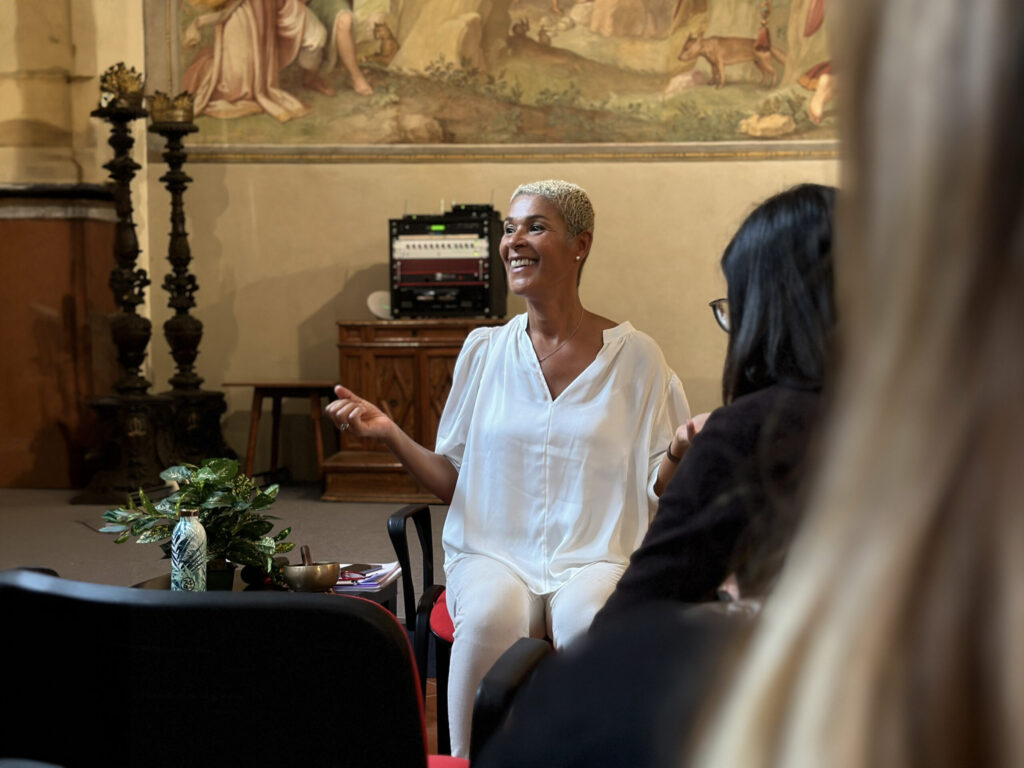
Through keynotes and conferences, I open conversations about time pressure, urgency culture, decision quality and the assumptions we have come to accept about speed and responsiveness.
Explore Speaking
Researching a New Time Culture
The New Time Culture™ grew out of a question that became increasingly important through my own experience:
What happens to our experience of time when we are no longer continuously available and responding?
Since 2023, I have practiced a weekly Digital Detox of approximately 30 hours.
What began as an experiment in disconnection gradually became a laboratory for observing attention, mental space, waiting, perception, pressure and the feeling that something always has to happen next.
Those observations opened a much larger inquiry into the culture of speed and permanent responsiveness in which we live and work.
Today, that inquiry is developing through my forthcoming book, The New Time Culture, ongoing research and international conversations with CEOs, founders, entrepreneurs and senior leaders across different countries, industries and organizational contexts.
The book explores what happens when urgency becomes the default – and what a different culture of time could make possible

About Sandrine Kom
Sandrine Kom is the founder of the I Have Time™ Method and author of the forthcoming The New Time Culture.
Her work explores how time pressure shapes the way we think, decide, communicate and collaborate.
Her thinking draws on ongoing research and international conversations with CEOs, founders, entrepreneurs and senior leaders, alongside years of practical exploration of time pressure, attention, digital overload and the conditions that allow people to think clearly.
Born in Paris, after many years in Berlin, she has made Florence- Italy her home since 2000 and works in English, French, Italian and German.
What Clients Say
“I don’t run after time anymore. I decide my rhythm, and it changed everything.”

Working with Sandrine felt like reopening a door I had forgotten. I feel present again — in my work and in my life.

My relationship with time used to be a fight. Now it’s a choice.

I was under pressure. I worked with Sandrine. Her method works.
